


Ethereum’s validator entry queue has reached a new all-time high, surpassing the previous peak from June 2023. This is not a sign of stress or dysfunction. On the contrary, it reflects a strong and growing demand to stake ETH and secure the network.
At the same time, an equally important signal is emerging on the other side of the system.
There is currently no exit queue (as of 25.01.2026).
Zero ETH waiting to be unstaked.
Together, these two data points tell a powerful story about market conviction, staking incentives, and how participants are positioning for Ethereum’s long-term future.
Entry Queue at ATH
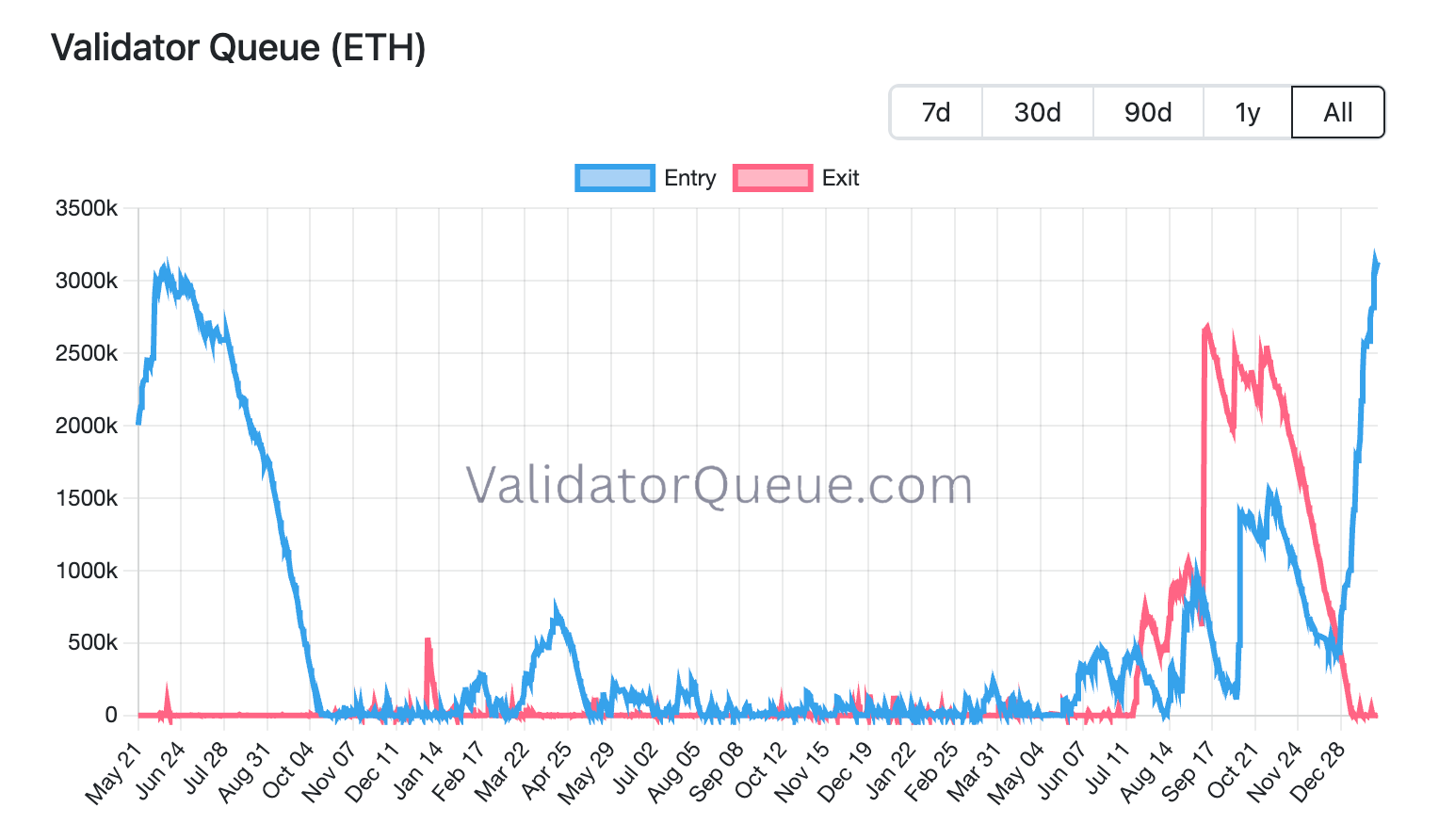
Ethereum is operating exactly as designed. The protocol intentionally limits how quickly validators can enter or exit the active validator set. This mechanism protects network stability and prevents sudden shifts in validator composition.
The current surge in the entry queue simply reflects demand outpacing the protocol’s fixed activation throughput.
- As a reminder, Ethereum’s activation churn limit is currently set at 8 validators per epoch, limiting new entries to approximately 1,800 validators (~57,600 ETH) per day. While the churn mechanism originally scaled for both entries and exits, the activation side is now capped to manage the growth of the validator set, while the exit churn remains dynamic to ensure network stability during periods of high turnover.
When demand to stake ETH exceeds this limit, a queue naturally forms.
Zero Exit Queue
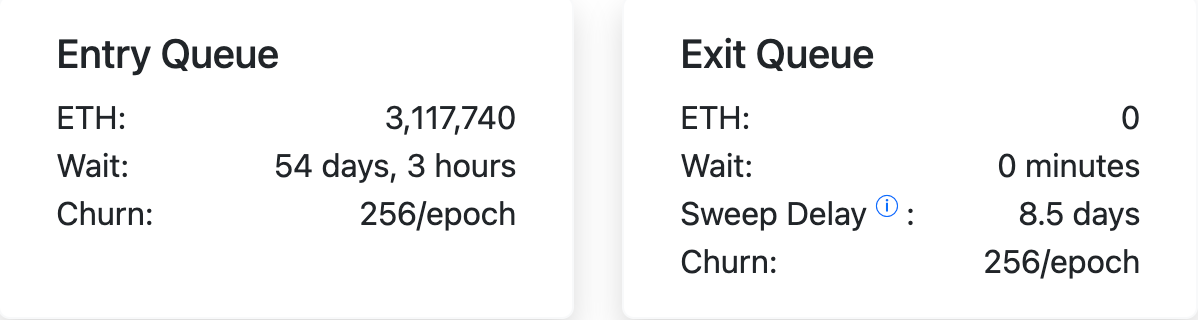
What makes the current situation unique is that no ETH is waiting to exit (as of 25.01.2026) the validator set.
This is a strong behavioral signal.
Historically, exit queues tend to grow during periods of uncertainty, volatility, or when large holders rotate capital out of staking. Today, we are seeing the opposite. Validators are not rushing to leave. Capital is staying committed.
This suggests:
- Long-term conviction in Ethereum=
- Confidence in staking yields relative to alternatives
- Reduced near-term sell pressure from staked ETH
What Is Driving the Surge?
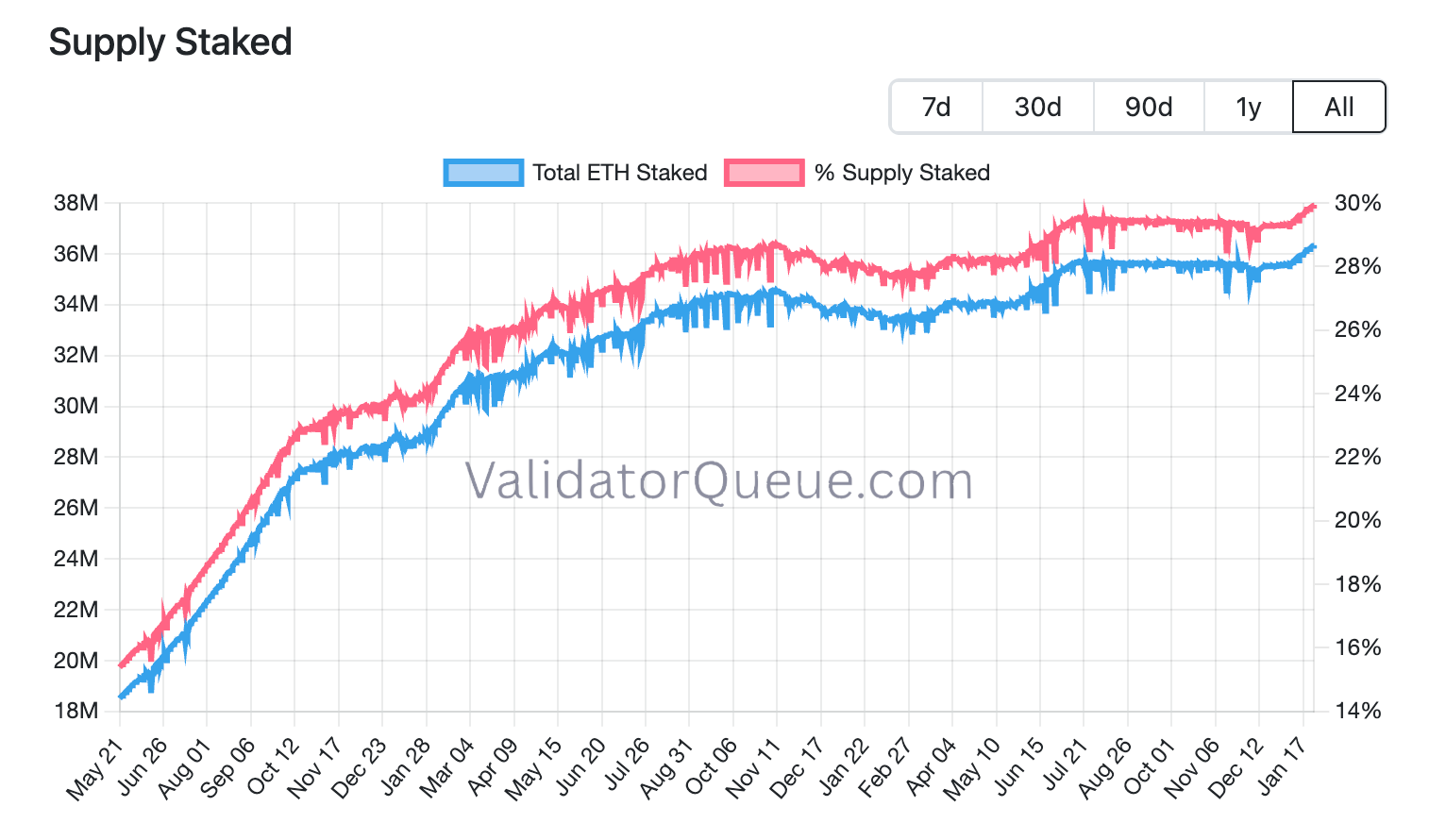
One likely contributor is Bitmine’s ongoing accumulation and staking of ETH. By moving large amounts of ETH from circulation into staking, this activity reduces liquid supply while generating yield, aligning with a long-term thesis on Ethereum.
Institutional behavior like this tends to have second-order effects:
- Increased entry queue pressure
- Lower circulating supply
- Reinforced perception of ETH as a yield-bearing, productive asset
The Cost of Waiting to Activate
Unlike validators in the exit queue, validators waiting in the entry queue do not earn rewards.
This distinction matters.
While exiting validators continue earning rewards until they formally exit, ETH waiting to activate sits idle from a yield perspective. In periods where entry queues stretch into weeks, the opportunity cost becomes material.
This is where alternative staking paths become especially relevant.
Liquid Staking in a High Entry Queue Environment
In an environment with:
- A long validator entry queue
- Zero exit pressure
- Strong staking demand
Liquid staking solutions such as Ether.Fi or Lido offer a clear advantage for many participants.
They allow users to:
- Earn yield from day one
- Avoid activation delays
- Bypass operational complexity and infrastructure costs
- Maintain liquidity through staking derivatives
This makes them particularly attractive to users who do not want to wait weeks to start earning rewards or to operate their own validator infrastructure.
Total Validators and Network Health
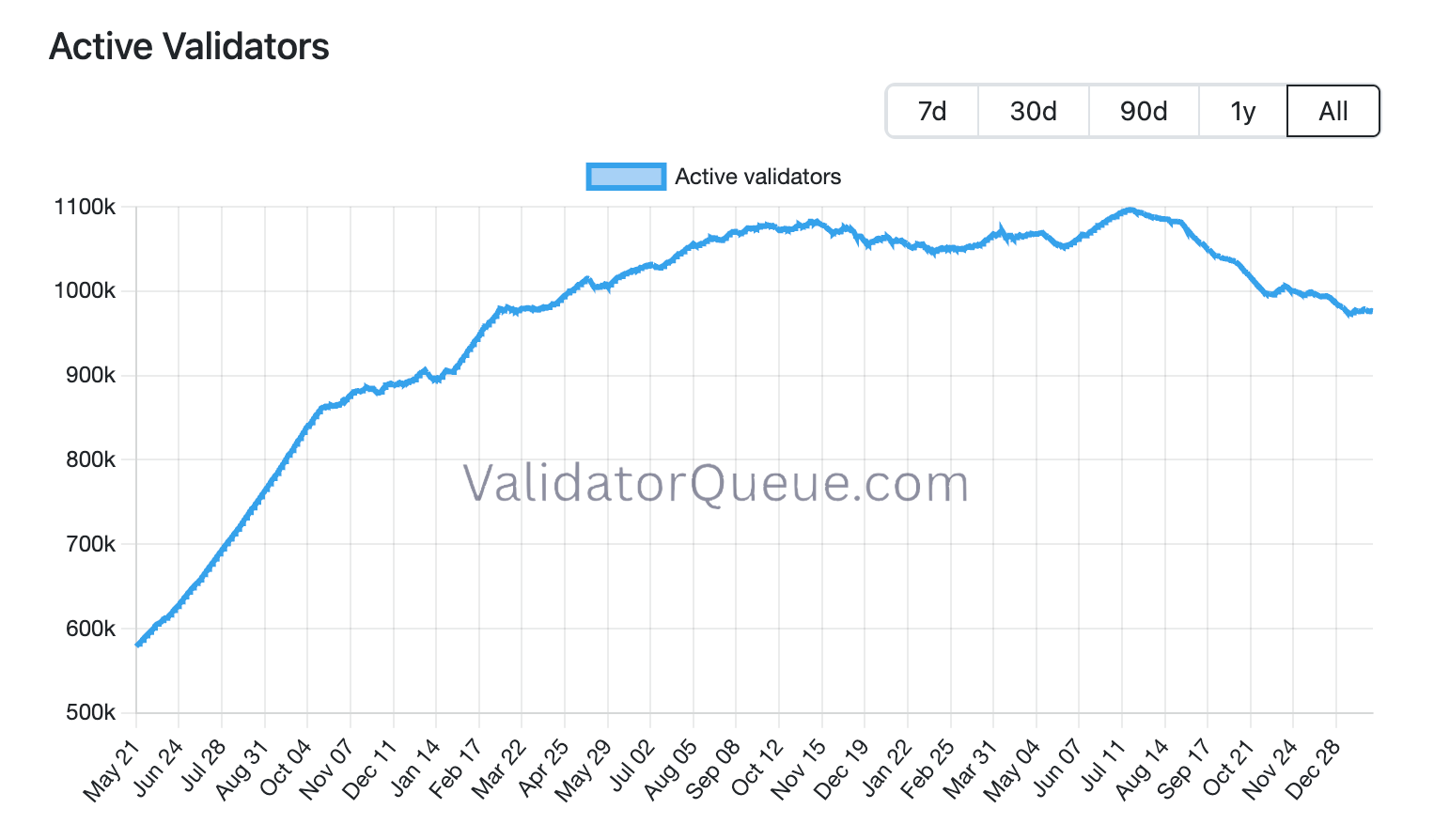
While the Ethereum validator entry queue has reached an all-time high, the total number of active validators has recently plateaued and is now slightly declining. This shift does not indicate weakening demand for staking, but rather reflects intentional protocol-level changes to validator growth.
Following recent updates to Ethereum’s consensus design, validator activation rates are now capped, significantly slowing the net expansion of the validator set compared to previous years. As a result, strong entry demand can coexist with a stable or even modestly declining active validator count.
In this context, validator queues should be understood as a signal of sustained interest constrained by protocol safeguards, not as a sign of stress. Ethereum’s staking layer is transitioning from rapid expansion to a more controlled, mature phase focused on long-term network stability.
We previously explored how Ethereum’s shift from rapid validator expansion toward capped churn dynamics reshapes validator growth and consolidation across the network. Read more here.
Final Thoughts
Ethereum’s staking dynamics today point to strong long-term alignment between capital, security, and incentives. While entry queues may extend, the lack of exit pressure underscores confidence in the network and its yield mechanics.
For ETH holders considering how and when to stake, understanding these mechanics is essential. Acting early or choosing the right staking path can significantly reduce missed rewards.
At Node Monster, we are proud to support projects like Ether.Fi that play a meaningful role in strengthening Ethereum’s staking ecosystem and overall network resilience.
